












25
Sep
Gardening Kits for Beginners

Gardening Kits for Beginners
Gardening is like a hobby. Everybody lik...
Expert Plant Care Guides • Houseplants • Gardening Tips
 Furniture
 Cooking
 Accessories
 Fashion
 Clocks
 LightingToys
For orders above €100
For All Your Questions
Hand MadeMinimalismElectronicsCars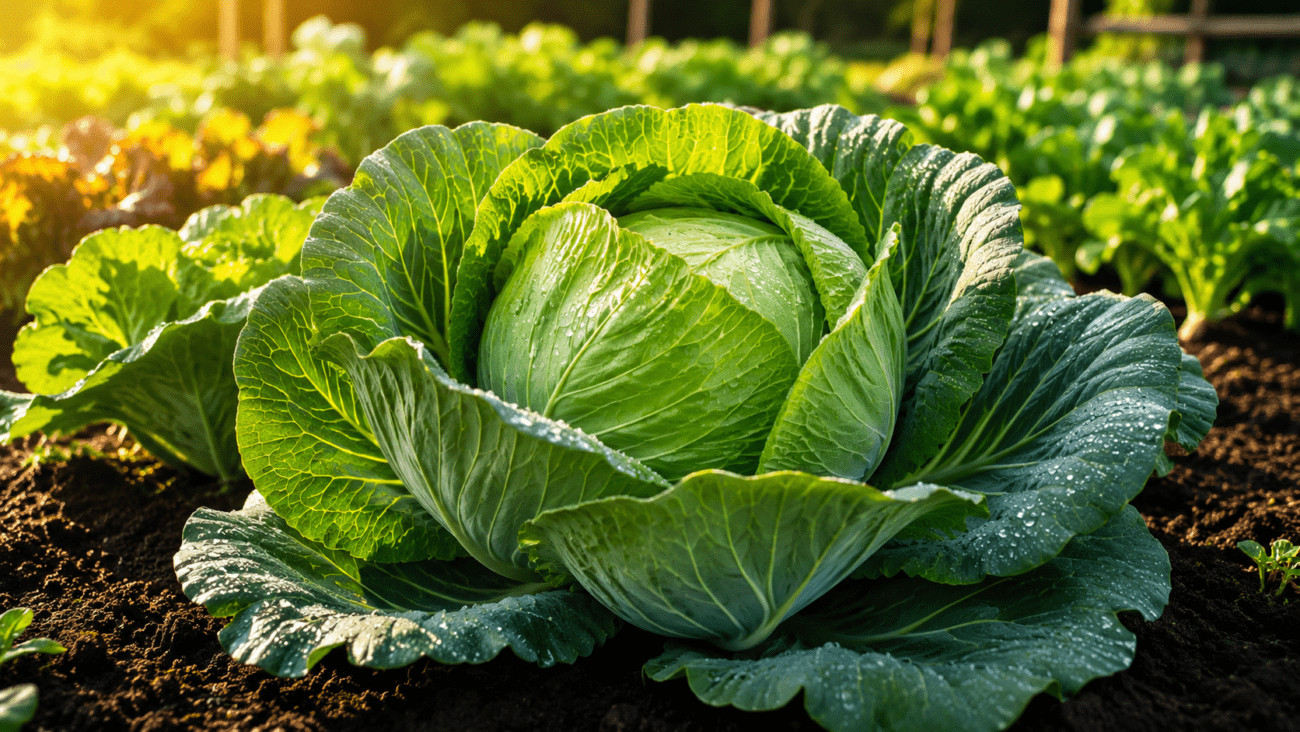
Growing cabbage was never high on my gardening list when I first started growing vegetables at home. Tomatoes, peppers, cucumbers—those were the crops that caught my attention. Cabbage looked too ordinary, and honestly, I assumed it would be difficult to grow because I had seen so many gardeners complain about insects ruining their harvest.
That changed after I planted a few cabbage seedlings one cool spring. I still remember checking them every morning, watching the leaves slowly unfold and wrap tighter week after week. It wasn’t a fast-growing vegetable, but there was something satisfying about seeing each loose leaf gradually form a firm, healthy head.
Of course, my first attempt wasn’t perfect. I planted them too close together, watered inconsistently during a warm spell, and underestimated how quickly cabbage worms could appear. Even so, I harvested enough fresh cabbage for several meals, and the experience taught me that cabbage is far more forgiving than many beginners expect.
Since then, cabbage has become one of the vegetables I recommend most often to new gardeners. One of the best things about growing cabbage is that you can get excellent results with just a few basic gardening tools and a little patience. With healthy soil, steady watering, and a little patience, almost anyone can grow crisp, flavorful cabbages at home—even in a container or grow bag if garden space is limited.
No matter where you plan to grow your cabbage—whether it’s in a backyard, a raised bed, a large container, or a sunny balcony—you’ll find practical steps here to help you grow healthy plants from planting to harvest. You’ll learn how to plant cabbage, prepare the right soil, choose suitable varieties, care for your plants, grow cabbage in pots, solve common problems, and know exactly when it’s time to harvest.
By the end of this guide, you’ll have everything you need to grow healthy cabbage plants with confidence.
Table of Contents
ToggleOne of the biggest reasons new gardeners struggle with cabbage has nothing to do with fertilizer, watering, or pests. In many cases, it’s simply because the plants were started at the wrong time of year.
Cabbage is a cool-season vegetable. It grows best when temperatures remain mild and consistent rather than hot and humid. While mature plants can tolerate light frosts surprisingly well, extended heat often causes slower growth, loose heads, or premature flowering.
If you’re gardening in most parts of the United States, spring and fall are generally the two best seasons for growing cabbage. Spring planting gives you an early summer harvest, while fall planting often produces sweeter, firmer heads because cooler weather improves both flavor and texture.
Gardeners in colder northern regions typically begin planting in early spring once the soil can be worked. In warmer southern climates, many gardeners skip the hottest months altogether and grow cabbage during fall and winter instead.
Rather than focusing on a specific calendar date, it’s often more helpful to pay attention to local temperatures. Cabbage grows happiest when daytime temperatures stay between about 60°F and 70°F (15–21°C).
Choosing the right season from the beginning gives your plants the best chance to develop compact, healthy heads before stressful weather arrives.
Unlike warm-season vegetables such as tomatoes or peppers, cabbage actually performs better as temperatures cool.
Young plants establish themselves quickly in cool soil, and steady weather encourages strong leaf development. As the plant matures, those outer leaves slowly wrap around the center until a firm cabbage head begins to form.
When temperatures become consistently hot, growth often slows, and some varieties may bolt before producing quality heads.
Planning your planting season around cooler weather is one of the easiest ways to improve your harvest.
Not all cabbage varieties mature at the same speed.
Spring cabbages usually grow relatively quickly and produce smaller, tender heads that are excellent for fresh salads and everyday cooking.
Winter cabbage varieties generally take longer to mature but often produce larger, denser heads that store well after harvest.
If this is your first time growing cabbage, choosing an early or mid-season variety usually makes the learning process much easier.
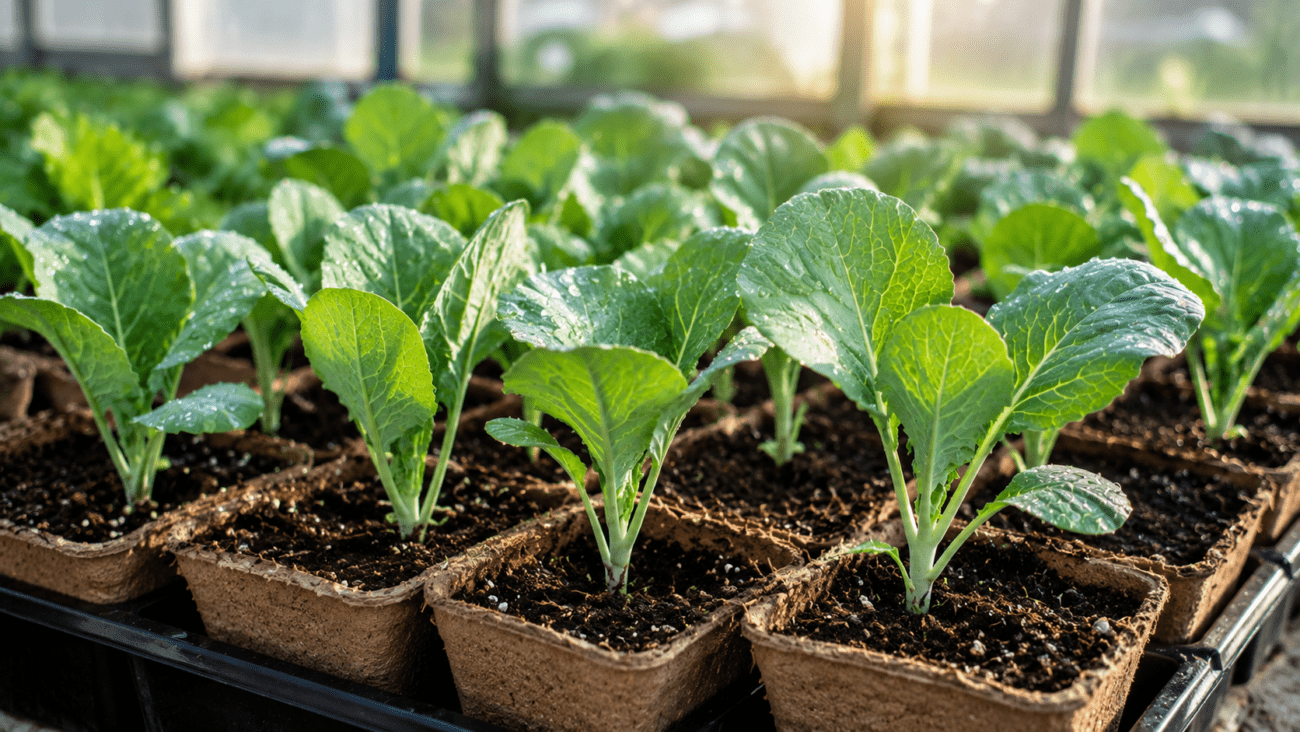
Planting cabbage isn’t difficult, but doing a few small things correctly at the beginning can make a noticeable difference later in the season. Healthy seedlings, proper spacing, and well-prepared soil all contribute to stronger plants and better harvests.
One mistake I made the first time was planting everything too close together. The young plants looked tiny, so it felt like there was plenty of space. A few weeks later, the leaves began overlapping, airflow became poor, and harvesting was much harder than it should have been. Since then, I’ve learned that giving cabbage enough room is one of the easiest ways to prevent future problems.
If you’re wondering, “How do I plant cabbage?”, Once you understand the basic routine, growing cabbage becomes a straightforward project that most beginners can handle with confidence.
Begin by planting strong, healthy seedlings in nutrient-rich soil. After watering them well, give the plants time to settle into their new location before adding any extra fertilizer.
Taking your time during planting is far easier than trying to fix problems later.
Strong seedlings usually become strong cabbage plants.
When buying or growing seedlings, look for plants with:
Avoid seedlings that appear tall and weak, have wilted leaves, or show signs of disease. A healthy start gives cabbage a much better chance of producing a firm, well-shaped head.
If you’re buying seedlings from a local garden center, don’t automatically choose the largest plants. Medium-sized, stocky seedlings often transplant more successfully than oversized ones that have been sitting in small containers for too long.
Both methods work well, and each has its advantages.
Starting from seed gives you access to a wider selection of cabbage varieties and is often the most economical option if you’re growing many plants. However, it requires more time, careful watering, and a little patience during the early stages.
Using seedlings is usually the easier choice for beginners. Young plants establish quickly, require less indoor preparation, and shorten the overall growing time by several weeks.
Personally, I often recommend seedlings for anyone planting cabbage for the first time. Healthy seedlings let you skip the early germination stage, making it easier to observe how cabbage develops and build confidence as the plants mature.
Once you’ve gained some confidence, growing cabbage from seed becomes much less intimidating.
Proper spacing is one of those details that’s easy to overlook but has a huge impact on the final harvest.
Each cabbage plant needs enough space for sunlight, airflow, and root development.
As a general guideline:
Large varieties often benefit from slightly wider spacing, while compact varieties can be planted a little closer together.
Giving each plant enough room also helps reduce humidity around the leaves, making fungal diseases less likely and allowing cabbage heads to develop evenly.
If you’re planting in raised beds, avoid the temptation to squeeze in extra plants. A smaller number of healthy cabbages almost always produces a better harvest than overcrowding the space.
Healthy cabbage begins below the surface.
Before I understood the importance of soil preparation, I used to think fertilizer alone would solve every gardening problem. What I eventually learned was that even the best fertilizer can’t compensate for poor soil.
Cabbage is considered a heavy feeder. It develops large leaves, a dense head, and an extensive root system, all of which require fertile, well-drained soil rich in organic matter.
Spending an extra half hour preparing the soil before planting often saves weeks of frustration later in the season.
Cabbage grows best in loose, fertile soil that holds moisture without becoming waterlogged.
A simple soil mix for garden beds or raised beds can include:
This combination creates a balance between moisture retention and airflow around the roots.
Cabbage also prefers soil that is slightly acidic to neutral, with a pH of approximately 6.0–7.0. If you’re unsure of your soil’s pH, an inexpensive soil test kit can provide a helpful starting point.
One habit that’s made a noticeable difference in my vegetable garden is adding organic matter before every planting season.
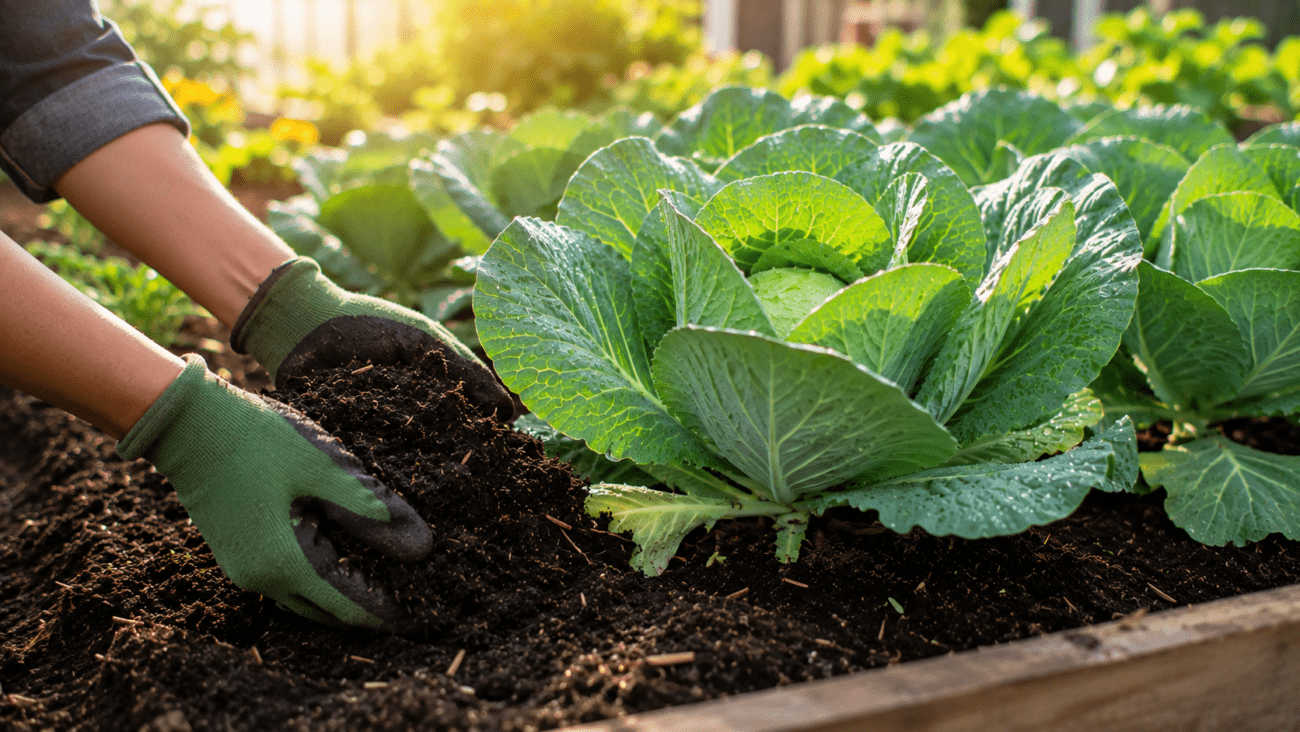
Instead of relying entirely on commercial fertilizers, I like to mix compost into the soil several weeks before planting. It improves soil structure, encourages beneficial microorganisms, and helps the soil retain moisture during dry periods.
Other natural soil improvements include:
These materials release nutrients gradually while improving long-term soil health.
If your soil is heavy clay, adding organic matter over several seasons can significantly improve drainage. On the other hand, sandy soils benefit from compost because it helps retain both moisture and nutrients.
Healthy soil isn’t built overnight, but every season you invest in it makes growing vegetables noticeably easier.
If there’s one lesson I’ve learned from growing cabbage, it’s that healthy heads aren’t produced by fertilizer alone. Good soil does most of the heavy lifting, while fertilizer simply gives the plants the nutrients they need at the right stages of growth.
During my first season, I made the common mistake of feeding cabbage too heavily with a high-nitrogen fertilizer. The plants responded with huge, beautiful leaves, but when harvest time arrived, the heads were smaller and looser than I had hoped. Since then, I’ve found that balanced feeding produces much better results.
Cabbage is considered a heavy-feeding vegetable because it grows quickly and produces a large amount of leafy growth before forming a dense head. Feeding consistently—but not excessively—is usually the best approach.
Like most leafy vegetables, cabbage depends on three primary nutrients throughout its life cycle.
Nitrogen (N) supports healthy leaf development during the early stages of growth.
Phosphorus (P) encourages strong root development, helping young plants establish themselves after transplanting.
Potassium (K) improves overall plant health, supports head formation, and helps cabbage tolerate environmental stress.
Besides these primary nutrients, cabbage also benefits from calcium, magnesium, and other trace minerals found naturally in compost and healthy garden soil.
Rather than chasing the “perfect” fertilizer, focus on maintaining healthy soil. Well-fed soil almost always grows healthier vegetables.
Even the best fertilizer won’t deliver great results if it’s applied at the wrong stage of the plant’s growth.
A simple feeding schedule works well for most home gardeners:
Avoid applying large amounts of nitrogen late in the season. Too much leafy growth at this stage may delay firm head development.
Steady growth is generally better than rapid growth.
If you prefer growing vegetables naturally, cabbage responds very well to organic fertilizers.
Some reliable options include:
Personally, I rely mostly on homemade compost because it improves both soil structure and fertility over time. Organic fertilizers may work more gradually than synthetic products, but they often build healthier soil for future growing seasons as well.
Even experienced gardeners occasionally make feeding mistakes.
Some of the most common include:
More fertilizer doesn’t always mean more cabbage. Healthy, steady growth nearly always produces the best harvest.
Growing cabbage becomes much easier when you break the process into simple steps.
Rather than trying to remember dozens of gardening tips, focus on doing a few important things consistently throughout the season.
Select an area that receives at least 6–8 hours of direct sunlight each day.
Good sunlight helps cabbage develop firm, compact heads instead of loose leafy growth.
Loosen the soil and mix in plenty of compost before planting.
Healthy soil provides the strong foundation every cabbage plant needs.
Plant cabbage seedlings at the same depth they were growing in their nursery containers.
Water thoroughly immediately after planting.
Leave approximately 18–24 inches (45–60 cm) between plants to allow proper airflow and healthy head development.
Crowded plants compete for nutrients and are often more susceptible to disease.
Cabbage prefers evenly moist soil.
Instead of watering lightly every day, give the plants a deeper watering several times each week whenever the top inch of soil begins to dry.
Consistent moisture helps prevent stress and encourages firm heads.
Apply fertilizer according to your chosen schedule without overfeeding.
Healthy, balanced growth produces better harvests than rapid, excessive growth.
Check your plants regularly.
A quick inspection every few days often catches insects or diseases before they become serious.
It’s much easier to remove a few cabbage worms than to repair heavily damaged leaves later.
Not everyone has room for a vegetable garden, but that doesn’t mean you can’t grow cabbage successfully.
I’ve been pleasantly surprised by how productive container-grown cabbages can be. With enough sunlight and regular care, even a small patio or balcony can produce healthy, full-sized heads.
Container gardening also gives you more control over soil quality, drainage, and watering.
If you’re wondering how to grow a cabbage plant in a pot, the process is surprisingly straightforward.
Cabbage develops a fairly large root system, so container size matters.
Choose a pot that is:
Larger containers help maintain more consistent soil moisture during warm weather.
Avoid using ordinary garden soil in containers.
Instead, fill the pot with a quality potting mix combined with compost.
A simple mixture works well:
This combination stays light while providing the nutrients cabbage needs.
Container-grown cabbage dries out faster than plants growing directly in the ground.
Check soil moisture regularly, especially during warmer weather.
Water thoroughly whenever the top inch of soil feels dry, allowing excess water to drain freely from the bottom of the container.
Consistent watering is one of the biggest differences between average container-grown cabbage and healthy, productive plants.
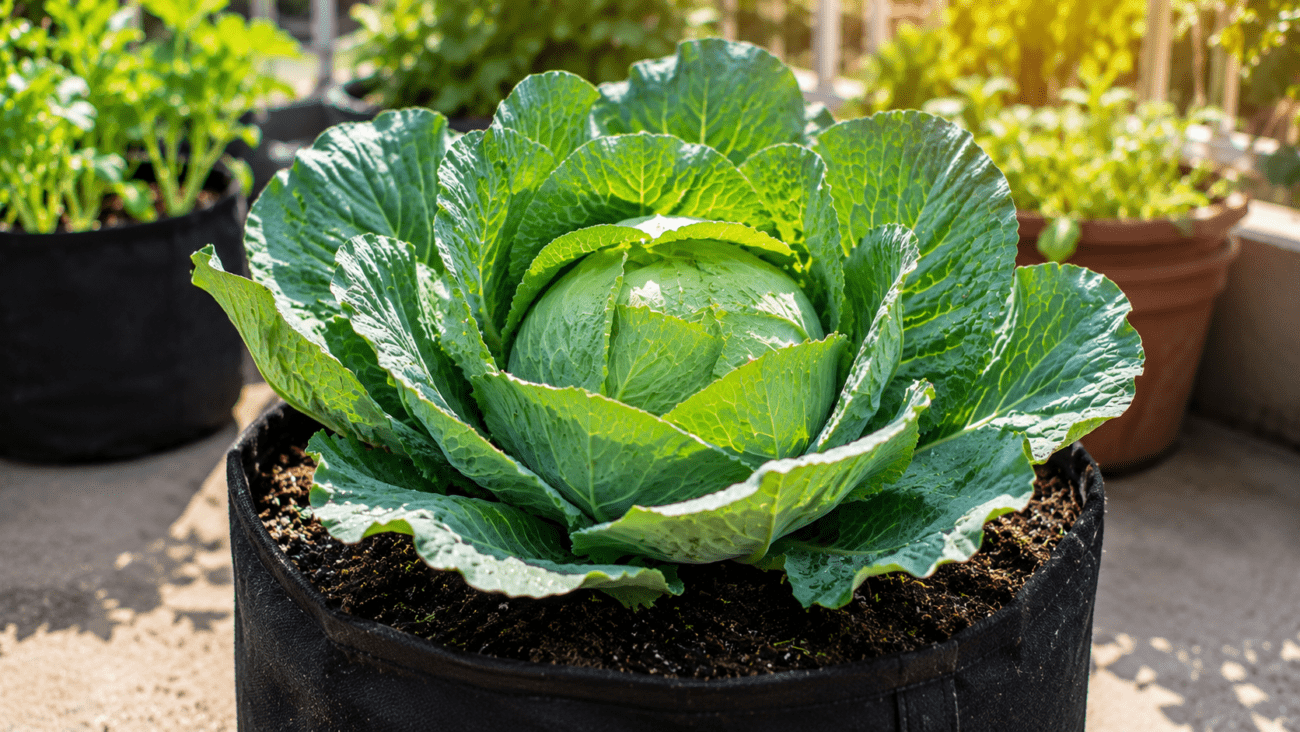
Grow bags have become one of my favorite options for growing vegetables in limited spaces.
I like using grow bags because they’re easy to handle, drain excess water well, and can be moved around whenever the weather becomes too hot, windy, or unpredictable.
For cabbage, choose a grow bag with a capacity of 10–15 gallons for a single plant.
Fill it with a rich potting mix, transplant your seedling, water deeply, and place the bag somewhere it will receive plenty of sunlight.
Because grow bags allow more airflow around the roots, the soil may dry slightly faster than traditional containers. Checking moisture every day during hot weather usually prevents problems before they start.
With regular watering and occasional feeding, cabbage often performs just as well in a grow bag as it does in a raised bed.
Once your cabbage plants are growing well, daily care becomes surprisingly simple. They don’t need constant attention, but a little consistency goes a long way.
I’ve found that spending just a few minutes checking the plants every couple of days often prevents much bigger problems later. Looking for insects, feeling the soil, and removing damaged leaves takes very little time, but it can make a noticeable difference by harvest season.
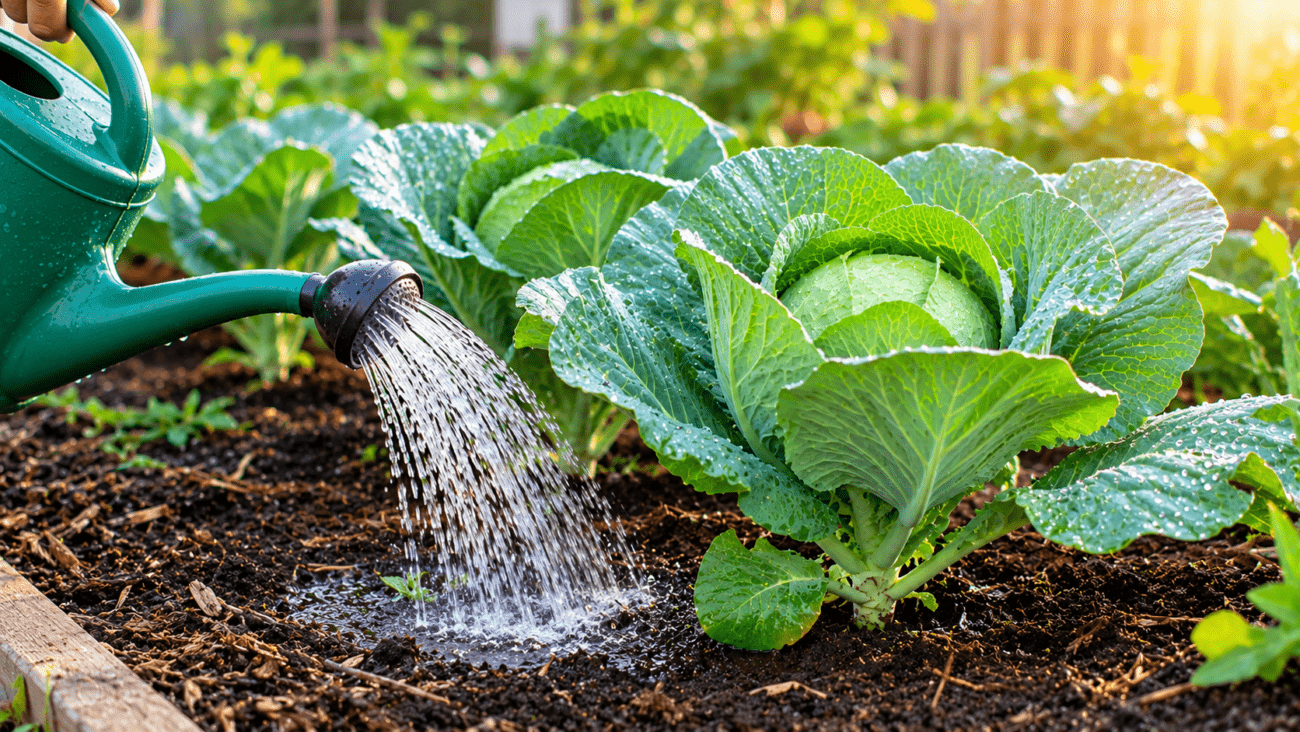
Cabbage grows best in consistently moist soil.
Instead of following the calendar, let the condition of the soil tell you when your cabbage needs water. If the top inch feels dry, it’s time to water.
Deep watering encourages stronger roots than frequent shallow watering. During cool weather, watering once or twice a week may be enough, while hot or windy conditions often require more frequent watering.
Try to water early in the morning whenever possible. This allows excess moisture on the leaves to dry during the day, helping reduce the risk of fungal diseases.
Healthy cabbage needs plenty of sunlight to produce firm, compact heads.
Aim for at least 6–8 hours of direct sunlight each day.
If your garden receives light afternoon shade during very hot summers, cabbage usually tolerates it well. However, too much shade often results in slower growth and loose heads.
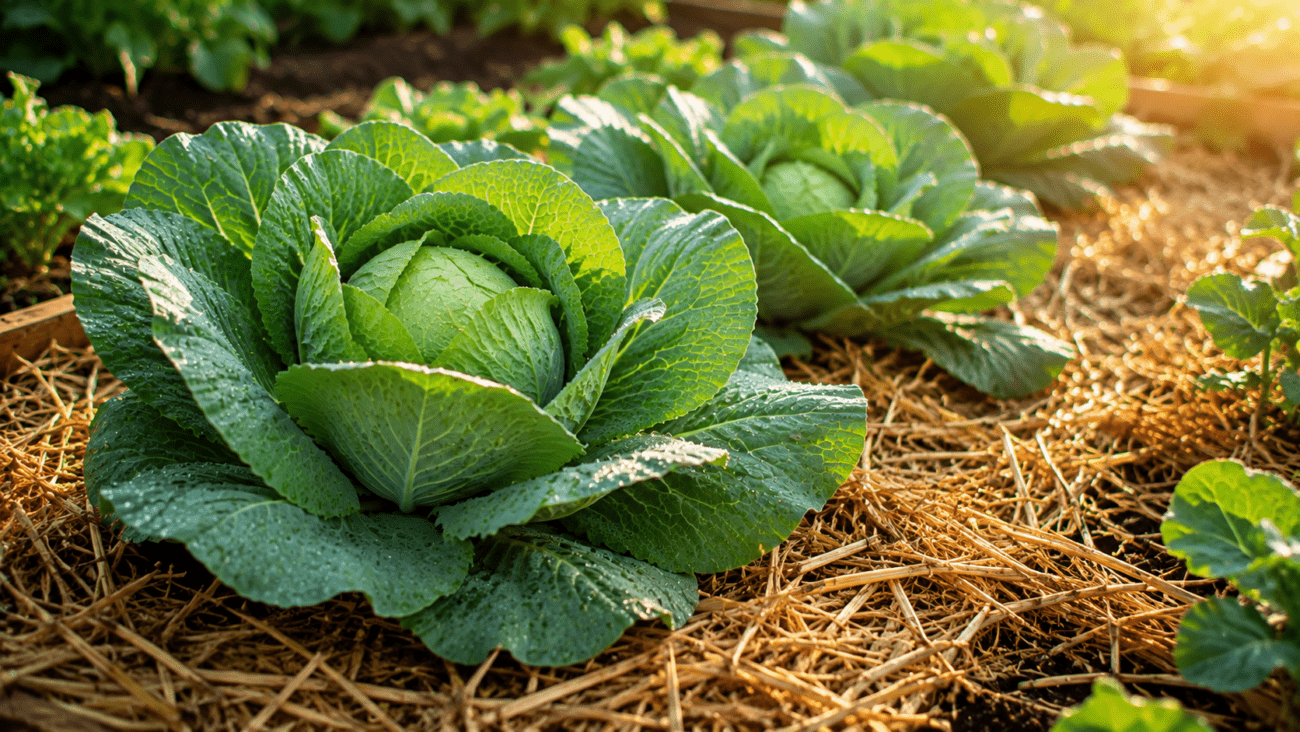
Mulch is one of the simplest ways to improve cabbage growth.
Adding a layer of organic mulch around each plant helps:
Shredded leaves, clean straw, untreated grass clippings, or compost all make excellent mulch materials.
Just avoid piling mulch directly against the stem, as this can encourage rot.
Even healthy cabbage plants occasionally face problems. The good news is that most issues are easy to manage if you catch them early.
If you’ve ever noticed irregular holes in cabbage leaves, cabbage worms are often the first suspects.
These green caterpillars blend in surprisingly well, so check both the upper and lower sides of the leaves regularly.
Hand-picking small numbers is often enough in a home garden. Floating row covers can also help prevent butterflies from laying eggs on young plants.
Aphids are tiny insects that usually gather on new growth and the undersides of leaves.
Large infestations may cause curled leaves or slow plant growth.
A strong spray of water often removes many aphids. Encouraging beneficial insects such as ladybugs can also help keep populations under control.
Sometimes a cabbage head suddenly cracks just before harvest.
This usually happens after a long dry period followed by heavy rain or excessive watering.
Maintaining consistent soil moisture throughout the season greatly reduces the chance of splitting.
If a mature head begins to split, it’s usually best to harvest it soon rather than leaving it in the garden.
A few yellow lower leaves late in the season are usually nothing to worry about.
However, widespread yellowing may indicate:
Removing damaged leaves and correcting the underlying cause is usually all that’s needed.
Choosing the right variety can make growing cabbage even more enjoyable.
Green cabbage is the classic variety most gardeners grow.
It produces firm, round heads and works well for salads, soups, stir-fries, coleslaw, and everyday cooking.
It’s also one of the easiest types for beginners.
Purple cabbage—often called red cabbage—adds beautiful color to the vegetable garden.
Its slightly peppery flavor makes it popular for fresh salads, pickling, and colorful side dishes.
The growing process is almost identical to green cabbage, so if you can grow one successfully, you can usually grow the other as well.
Bravo cabbage is known for producing dense, attractive heads with good storage quality.
It’s often chosen by gardeners looking for reliable harvests and consistent performance throughout the growing season.
Spring cabbage varieties are generally quicker to mature than many winter types.
They produce smaller, tender heads and are ideal for gardeners who want an earlier harvest.
If you’re planting cabbage for the first time, an early spring variety can be a rewarding place to start.
One of the questions I hear most often is:
How long does cabbage take to grow?
The answer depends mainly on the variety you’re growing and the weather throughout the season.
Most cabbage varieties are ready to harvest in approximately 70 to 120 days from planting.
Early varieties mature more quickly, while larger winter cabbages often need additional time to develop firm heads.
Rather than counting days alone, pay close attention to the size and firmness of the cabbage head. That’s usually a better indicator than the calendar.
Knowing when to harvest is almost as important as knowing how to grow.
A cabbage is usually ready when the head feels firm and solid when gently squeezed.
If the head still feels soft or loose, giving it another week may improve both size and quality.
Avoid leaving mature cabbage in the garden much longer than necessary, especially if heavy rain is expected, as overly mature heads are more likely to split.
Harvesting cabbage is quick and satisfying.
Using a clean, sharp garden knife, cut the stem just below the head while leaving a few outer leaves attached.
If the plant remains healthy, some varieties may even produce several smaller side heads after the main cabbage has been harvested.
Remove any damaged outer leaves before storing your cabbage.
Fresh cabbage keeps best in a cool, humid location or in the refrigerator, where it can remain in good condition for several weeks.
Yes. A large container with quality potting mix, good drainage, and regular watering can produce excellent cabbage.
Yes. Around 6–8 hours of direct sunlight each day usually produces the healthiest plants.
A simple way to decide when to water is to feel the soil with your finger. If the surface no longer feels evenly moist, it’s usually time for a deep watering. Cabbage grows best when the soil stays evenly moist throughout the season, even if that means adjusting your watering routine as the weather changes.
In cooler climates, yes. In hotter regions, cabbage generally performs much better during spring, fall, or winter.
Absolutely.
With healthy soil, regular watering, and enough sunlight, cabbage is one of the more beginner-friendly vegetables to grow.
Growing cabbage taught me something that applies to almost every vegetable in the garden: success rarely comes from doing one thing perfectly. Instead, it’s usually the result of many small habits—preparing the soil well, watering consistently, checking plants regularly, and being patient while nature takes its course.
If this is your first season growing cabbage, don’t worry about making everything perfect. Every garden is different, and every season brings new lessons. Even experienced gardeners continue learning from each crop they grow.
Start with healthy seedlings, give your plants enough space, care for them consistently, and enjoy the process. Before long, you’ll be harvesting fresh, homegrown cabbage that’s rewarding not only because of the harvest itself, but because you grew it with your own hands.
And once you’ve mastered cabbage, you’ll find that many of the same gardening principles apply to other vegetables as well. If you’re planning your next crop, our guide on How to Grow Potatoes is another beginner-friendly resource that can help you continue building a productive vegetable garden.