

How to Grow Onions: Complete Guide from Seed to Harvest
Quick Answer
Learning how to grow onions is easier than many beginners think. Start by choosing the right onion variety for your region, then plant seeds, sets, or seedlings in loose, well-drained soil with plenty of sunlight. Keep the soil consistently moist, feed the plants regularly, and harvest once the tops naturally fall over and begin to dry. With proper care, onions can produce healthy bulbs that store well for months after harvest.
In This Guide, You'll Learn
In this complete beginner’s guide, you’ll learn:
- How to grow onions successfully at home
- The difference between onion seeds, onion sets, and seedlings
- The best time to plant onions in spring and fall
- How deep and how far apart to plant onions
- The best soil and fertilizer for healthy onion bulbs
- How to grow onions in containers and indoors
- How to grow larger onion bulbs naturally
- Common onion growing mistakes to avoid
- When and how to harvest onions for maximum storage life
Table of Contents
ToggleUnderstanding Onions
Onions (Allium cepa) are one of the most widely grown vegetables in home gardens around the world. They are easy to grow, store well after harvest, and can be used in countless recipes throughout the year. Whether you want crisp green onions for fresh salads or large storage bulbs for cooking, learning how to grow onions is a rewarding skill for every gardener.
I grew up in a farming family where onions were one of the vegetables we planted almost every year. Over time, I learned that growing healthy onions is less about luck and more about understanding what the plants actually need. Once you provide the right amount of sunlight, fertile soil, moisture, and proper spacing, onions are surprisingly reliable and can produce an excellent harvest even in a small home garden.
One of the reasons onions are so popular is their versatility. Onions grow successfully in traditional garden beds, raised beds, containers, and even indoors if you’re harvesting fresh green onions. Gardeners can start with onion seeds, onion sets, or young transplants, depending on their climate, available time, and gardening experience.
Before planting, however, it’s important to understand that not all onions grow the same way. Different varieties respond differently to daylight hours, which directly affects bulb formation. Choosing the correct type for your region is one of the biggest factors in growing healthy, well-sized onions.
Different Types of Onions
There are many onion varieties available, but most home gardeners grow one of four common types:
- Yellow onions
- White onions
- Red onions
- Sweet onions
Yellow onions are the most popular choice because they store well and have a balanced flavor that works in almost any recipe.
White onions have a milder taste and crisp texture, making them a favorite for fresh dishes, tacos, and salsa.
Red onions are known for their attractive purple-red skin and slightly sweet flavor. They are commonly eaten raw in salads, sandwiches, and burgers.
Sweet onions contain less sulfur than other varieties, giving them a noticeably milder taste. They are excellent for grilling, roasting, and caramelizing.
Choosing the right variety depends on your local climate, cooking preferences, and whether you want onions for fresh eating or long-term storage.
Long-Day vs. Short-Day vs. Intermediate-Day Onions
One of the most important things beginners often overlook is that onions form bulbs based on day length, not simply temperature.
Long-day onions require about 14–16 hours of daylight to produce large bulbs. These varieties produce their best bulbs in northern regions that experience long summer daylight hours.
Short-day onion varieties start developing bulbs after receiving approximately 10–12 hours of daylight, making them well suited to southern areas with mild winters.
Intermediate-day onions, sometimes called day-neutral onions, require roughly 12–14 hours of daylight. They grow well across many central regions and offer greater flexibility for home gardeners.
Planting the wrong type for your location often results in small bulbs or poor yields, even if the plants appear healthy. Selecting the correct day-length variety is one of the simplest ways to improve your harvest.
White, Yellow, Red, and Sweet Onion Varieties
If you’re wondering which onions are best for your garden, these beginner-friendly varieties are excellent choices:
- Yellow onions: Copra, Patterson, Yellow Sweet Spanish
- White onions: White Lisbon, White Sweet Spanish
- Red onions: Red Burgundy, Red Zeppelin
- Sweet onions: Walla Walla, Texas Super Sweet, Vidalia-type varieties
If your goal is storing onions through winter, yellow storage varieties are generally the best option because they have a longer shelf life.
If you enjoy fresh salads or sandwiches, sweet and red onions provide excellent flavor with less pungency.
Regardless of the variety you select, starting with healthy planting material and choosing one that’s well suited to your local climate will greatly improve your chances of harvesting large, high-quality onion bulbs.
Best Time to Plant Onions
Planting onions at the right time is one of the biggest factors that determines whether you’ll harvest large, healthy bulbs or end up with small, underdeveloped ones. While watering and fertilizing receive plenty of attention, planting at the right time is equally important for growing healthy onions. Planting onions too early can expose them to prolonged cold, which may slow early growth and increase the risk of bolting later in the season. On the other hand, planting too late often gives the plants less time to develop strong bulbs before hot weather arrives.
The ideal planting season depends on your local climate and the type of onion you choose. Some onions are planted in early spring, while others perform much better when planted during fall. Once you understand the difference, you’ll know exactly when to plant onions for the best possible harvest.
When to Plant Onions
The best time to plant onions depends largely on your USDA Hardiness Zone and the variety you’re growing.
In colder northern climates, onions are usually planted in early spring as soon as the soil becomes workable. This allows the plants to establish themselves before the long summer days trigger bulb formation.
Gardeners living in warmer southern regions often have another excellent option—fall planting. Mild winters allow onion plants to establish roots before cold weather arrives, resulting in stronger growth and earlier harvests the following year.
If you’re growing onions from seeds, start them indoors approximately 8–10 weeks before your area’s last expected spring frost. This gives young plants enough time to develop before transplanting outdoors.
Onion sets and transplants can usually be planted directly into the garden once soil temperatures remain above 40°F (4°C) and the ground is no longer frozen.
Choosing the proper planting window helps onions develop healthy roots, vigorous leaves, and eventually large bulbs.
Spring vs. Fall Onion Planting
Both spring and fall planting can produce excellent onion crops, but each method offers different advantages.
Most home gardeners choose to plant onions during spring because it fits the growing season in many regions. With warmer weather and increasing daylight, onion plants first develop healthy green foliage before shifting their energy toward bulb formation. This approach works well in regions with cold winters.
Fall planting, however, has become increasingly popular in areas with mild winters. During autumn, onions establish an extensive root system before entering winter dormancy. As warmer weather returns in spring, the plants begin growing vigorously again, often leading to larger bulbs and an earlier harvest than spring-planted onions.
If you live in a region with harsh freezing winters, spring planting is generally the safer option. However, gardeners in warmer climates often enjoy excellent success by planting onions in fall, especially when growing suitable short-day varieties.
Understanding your local climate is the key to deciding which planting season will produce the healthiest onion crop.
Planting Onions in Autumn
For many gardeners in USDA Zones 7–10, autumn onion planting provides several important advantages.
Plant onions approximately 4–6 weeks before the first expected frost. This allows the plants to establish healthy roots while avoiding excessive top growth before winter arrives.
During winter, onion plants remain relatively dormant but continue developing their root systems whenever soil temperatures remain above freezing. As soon as spring returns, they begin growing rapidly, often producing larger bulbs than spring-planted onions.
When planting onions in autumn, choose a sunny location with loose, fertile, well-drained soil. Avoid areas where water tends to collect during winter, as prolonged wet conditions may cause bulbs to rot.
Applying a light layer of mulch after planting can help protect young plants from repeated freezing and thawing while conserving soil moisture throughout winter.
Onion Sets for Fall Planting
For fall planting, many gardeners choose onion sets because they establish faster and reach maturity sooner than onions started from seed.
Onion sets are simply small immature bulbs grown during the previous season. Once planted, they resume growth much faster than seeds, making them an excellent choice for beginners.
Before planting, inspect the onion sets carefully and select only firm, healthy bulbs. Discard any soft, moldy, or damaged sets.
Plant onion sets with the pointed end facing upward, leaving the tip just above the soil surface. Proper spacing and planting depth help encourage healthy bulb development later in the growing season.
Fall-planted onion sets usually require very little attention during winter. Once spring temperatures begin rising, regular watering and fertilization will encourage vigorous leaf growth and ultimately produce large, healthy onion bulbs.
Choosing the Best Planting Method
Before planting begins, you’ll need to decide which onion-growing method best suits your garden and growing conditions. Fortunately, there are several reliable methods, and each has its own advantages. You can grow onions from seeds, onion sets, seedlings, or even sprouted onions from your kitchen.
The best method depends on your gardening experience, local climate, available growing season, and how quickly you want to harvest. While all four methods can produce healthy onions, some are easier for beginners than others.
In the following sections, you’ll learn the advantages and disadvantages of each planting method so you can choose the one that best fits your garden.
Growing Onions from Seeds
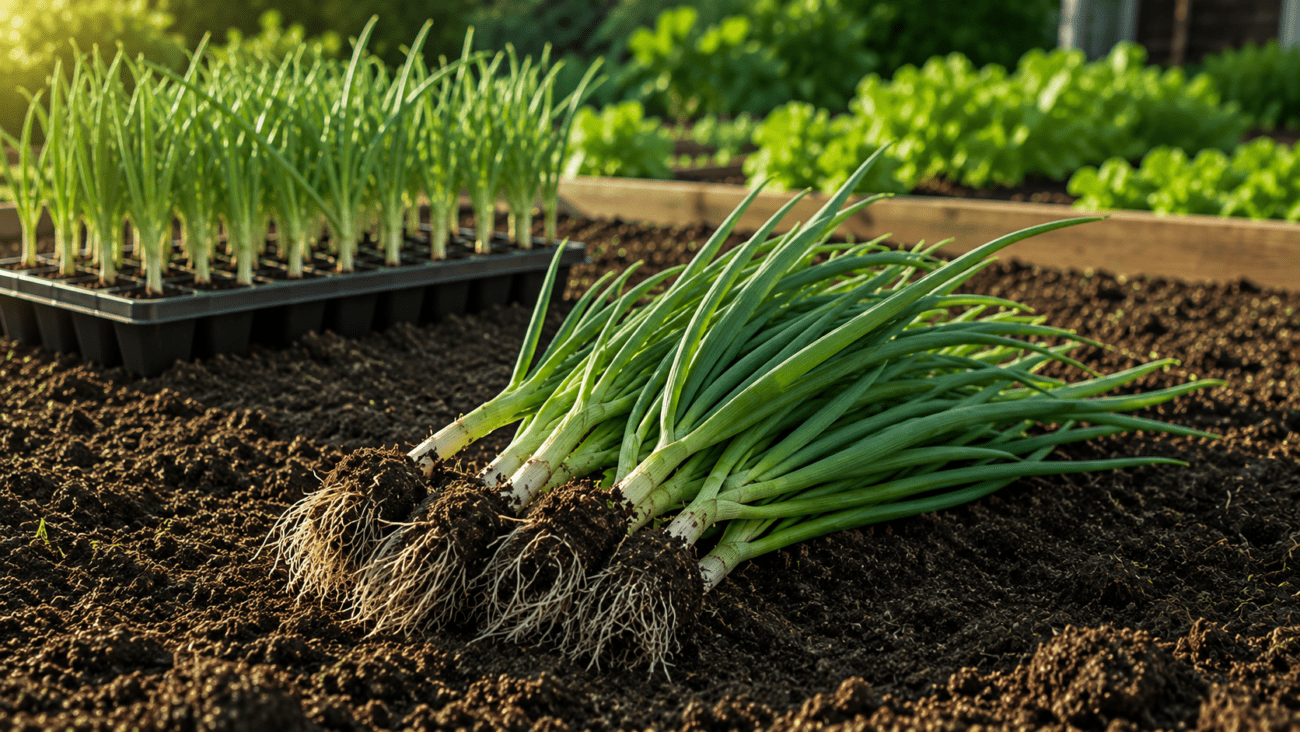
If you’re looking for the most economical way to grow onions, starting from seeds is an excellent choice. Growing onions from seed gives you access to hundreds of onion varieties that may not be available as sets or transplants. Although it takes a little more time and patience, many experienced gardeners prefer this method because it produces healthy, vigorous plants with excellent bulb quality.
If you’re wondering how to grow onions from seed, begin by sowing seeds indoors about 8–10 weeks before the last expected spring frost in your area. Fill seed trays or small containers with a fine seed-starting mix, place the onion seeds about ¼ inch (6 mm) deep, then cover them with a thin layer of soil. Keep the growing medium evenly moist and place the trays in a bright location or under grow lights.
After the seedlings have produced several healthy leaves and outdoor conditions are suitable, gradually harden them off for about a week before moving them into the garden.
Growing onions from seed requires more time than using onion sets, but it offers the greatest variety selection and is often the best option for gardeners who want to grow unique onion cultivars.
Growing Onions from Onion Sets
For beginners, onion sets are usually the easiest and fastest planting option.
An onion set is a small immature onion bulb grown during the previous season and stored until planting time. Since the plants have already completed their first stage of growth, they establish quickly and require less maintenance than seedlings.
Before planting, select firm, healthy onion sets that show no signs of mold or softness. Smaller sets often produce better bulbs because oversized sets may bolt and produce flower stalks instead of large onions.
Position each onion set with its pointed tip facing upward, leaving the tip level with or just above the soil surface before gently pressing the surrounding soil into place.
If you’re planting several rows, maintain proper spacing so each plant has enough room to develop a healthy bulb.
For gardeners with shorter growing seasons, onion sets are one of the most dependable ways to produce a successful harvest.
Growing Onions from Seedlings (Starts)
Another popular method is planting young onion seedlings, often called onion starts or transplants.
Many local nurseries sell healthy onion seedlings in spring, making this an excellent option for gardeners who want to skip the seed-starting stage while still enjoying strong, vigorous plants.
Before planting, prepare loose, fertile soil and water the seedlings thoroughly. Carefully separate individual plants without damaging the delicate roots.
If you’re wondering how to plant onion starts or how to plant onion plants, transplant each seedling at approximately the same depth it was previously growing. Avoid burying too much of the stem, as this can slow bulb development.
Water thoroughly after transplanting to help settle the soil around the roots and reduce transplant shock.
Seedlings generally establish quickly and provide an excellent balance between convenience and high-quality bulb production.
Growing Onions from Sprouted Onions
Many gardeners wonder whether they can grow onions from onions that have already sprouted in the kitchen.
The answer is yes—but with a few limitations.
If an onion develops green shoots during storage, it can be replanted outdoors or in a container. Carefully cut the onion into sections if multiple sprouts have formed, ensuring each section contains roots attached to the sprout.
Plant each section in loose, well-drained soil with the sprout pointing upward. Water lightly until new growth becomes established.
Sprouted onions can continue growing after planting, but they often produce smaller bulbs and are usually better suited for harvesting green shoots. In many cases, gardeners grow them primarily for fresh green onions or to produce seed for future planting.
If your goal is harvesting large, high-quality bulbs, starting with fresh seeds, healthy onion sets, or vigorous seedlings usually produces better results.
Best Soil for Onions
Healthy onions begin with healthy soil. Even the best onion varieties struggle to produce large bulbs if they’re planted in compacted, poorly drained ground. Fortunately, preparing suitable soil isn’t difficult, and doing so before planting can make a noticeable difference in both bulb size and overall yield.
Onions grow best in loose, fertile soil that drains well while still retaining enough moisture for steady growth. Heavy clay soil can restrict bulb expansion, while overly sandy soil dries out too quickly and often requires more frequent watering.
Adding organic matter such as finished compost or well-rotted manure before planting improves soil structure, increases microbial activity, and helps maintain consistent moisture throughout the growing season.
Soil pH Requirements
Onions perform best when the soil pH falls between 6.0 and 6.8, which is considered slightly acidic to neutral.
Testing your soil before planting is one of the smartest investments you can make. Testing your soil before planting helps determine whether the pH is suitable and identifies any important nutrients that may need to be added.
If the soil is too acidic, agricultural lime can gradually raise the pH. If it’s too alkaline, elemental sulfur or other approved soil amendments may help lower it over time.
Maintaining the proper soil pH improves nutrient availability, allowing onion roots to absorb what they need for vigorous growth and better bulb development.
Should Onions Be Planted in Loose Soil?
Many beginner gardeners ask whether onions should be planted in loose soil.
The answer is yes.
Loose, crumbly soil allows developing bulbs to expand naturally without unnecessary resistance. Compacted soil often produces smaller onions and may lead to misshapen bulbs.
Before planting, loosen the top 8–10 inches (20–25 cm) of soil and remove rocks, large clumps, and weeds. This creates an ideal environment for healthy root growth and proper bulb formation.
If your garden contains heavy clay, mixing in compost or other organic matter will improve both drainage and soil texture.
Preparing Garden Soil
Preparing the planting area several weeks before planting gives onions the best possible start.
Begin by removing weeds, grass, and plant debris from the growing area. Then incorporate 2–3 inches of compost into the top layer of soil.
If your soil test indicates nutrient deficiencies, incorporate a balanced fertilizer before planting while following the recommended application rate on the product label.
Finish by leveling the soil with a rake to create a smooth planting bed that’s ready for seeds, onion sets, or young onion plants.
A well-prepared garden bed encourages faster establishment, healthier foliage, and ultimately produces larger, better-quality onion bulbs.
How to Plant Onions
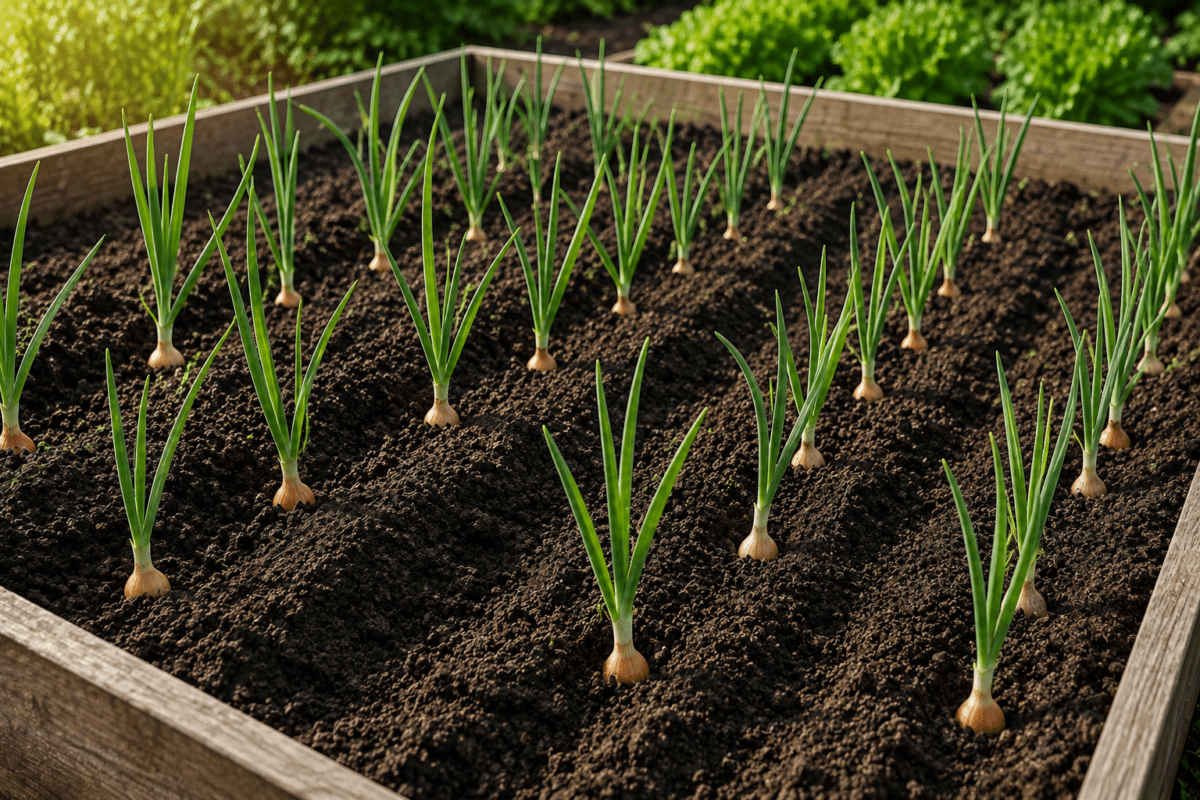
Once you’ve chosen the right onion variety and prepared healthy soil, it’s time to plant. Proper planting depth and spacing are essential because onions need enough room to develop large, well-shaped bulbs. Planting too deeply can delay bulb formation, while overcrowding often results in smaller onions.
Regardless of whether you choose seeds, onion sets, or transplants, using the proper planting technique helps establish healthier plants from the beginning.
How Deep to Plant Onions
One of the most common questions beginners ask is how deep to plant onions.
If you’re planting onion sets, place each set so that the pointed tip is just above or level with the soil surface. The bulb itself should sit about 1 inch (2.5 cm) below the surface. Cover it lightly with soil, but avoid burying it too deeply, as this can reduce bulb development.
When planting onion seedlings or transplants, position them at approximately the same depth they were growing in their nursery trays. Burying too much of the stem may slow growth, while planting too shallowly can leave the roots exposed.
If you’re planting onion seeds, sow them about ¼ inch (6 mm) deep and lightly cover them with fine soil. Keep the seedbed consistently moist until germination occurs.
Correct planting depth encourages healthy root establishment and allows bulbs to expand properly throughout the growing season.
How Far Apart to Plant Onions
Proper spacing is just as important as planting depth.
If onions are planted too close together, they compete for sunlight, nutrients, and water, producing smaller bulbs. Giving each plant enough room allows better airflow and encourages larger, healthier onions.
For bulb onions, space plants 4–6 inches (10–15 cm) apart.
If you’re growing green onions (scallions), you can reduce spacing to about 2 inches (5 cm) apart since large bulb development isn’t necessary.
Leave approximately 12–18 inches (30–45 cm) between rows to make watering, weeding, and harvesting easier.
Following proper onion spacing also reduces humidity around the foliage, helping prevent common fungal diseases.
Onion Spacing Guide
The ideal spacing depends on what you plan to harvest.
Purpose | Plant Spacing | Row Spacing |
Green onions | 2 inches (5 cm) | 12 inches (30 cm) |
Medium bulbs | 4 inches (10 cm) | 12–15 inches (30–38 cm) |
Large storage onions | 6 inches (15 cm) | 15–18 inches (38–45 cm) |
If you’re unsure which spacing to choose, remember that giving onions slightly more room almost always results in larger bulbs.
Growing Onions in Containers
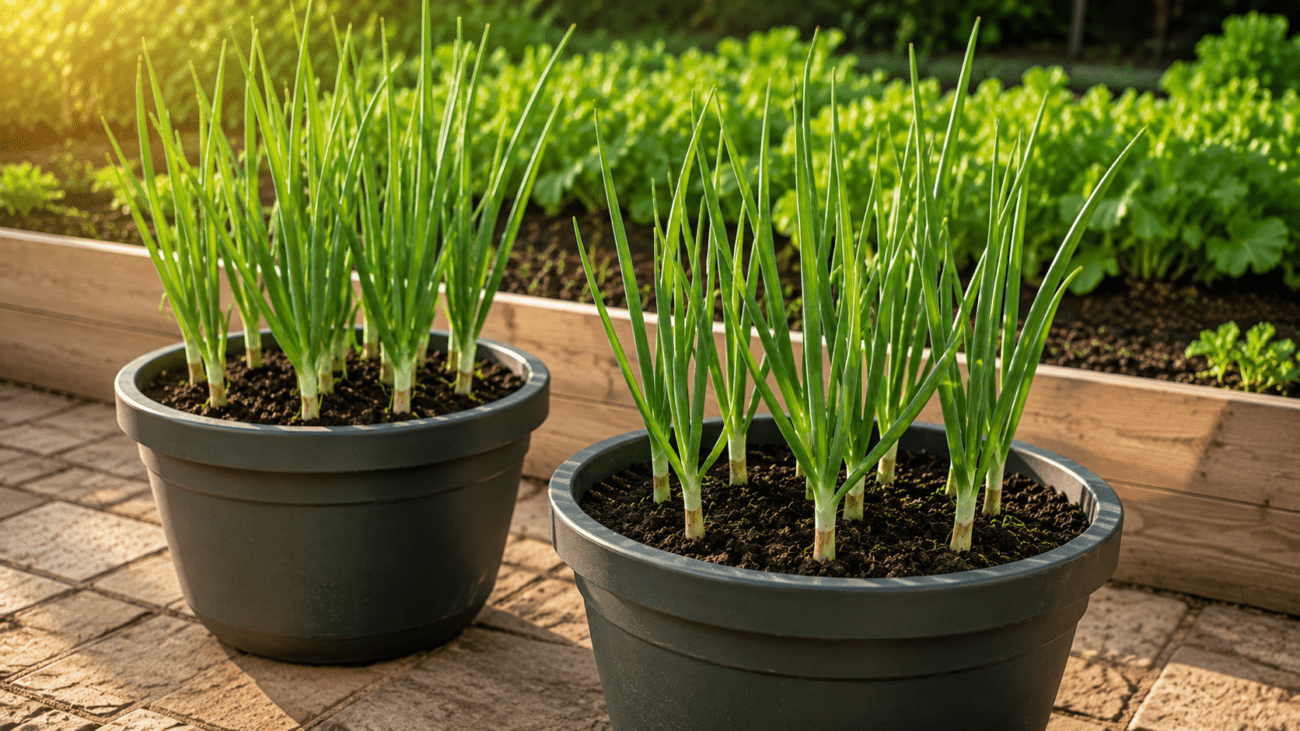
Don’t have a large vegetable garden? No problem. Growing onions in containers is an excellent solution for patios, balconies, decks, and other small spaces. As long as the containers receive plenty of sunlight and have good drainage, onions can grow just as successfully as they do in garden beds.
Container gardening also makes it easier to control soil quality, watering, and weeds, making it a great option for beginner gardeners.
Choosing the Right Container
Selecting the right container is the first step toward a successful harvest.
Select a container at least 10–12 inches (25–30 cm) deep and make sure it has plenty of drainage holes. A wider container provides enough space to grow several onion plants while keeping the recommended spacing.
Fabric grow bags, plastic containers, wooden planters, and raised planter boxes all work well for onion cultivation.
Avoid containers that retain excess water, as constantly wet soil may cause bulbs to rot.
Best Soil for Onions in Containers
The best soil for onions in containers is light, fertile, and well-draining.
A simple mixture works very well:
- 60% high-quality potting mix
- 30% finished compost
- 10% perlite or coarse sand
This blend provides excellent drainage while holding enough moisture to support healthy root growth.
Adding a slow-release balanced fertilizer before planting helps provide nutrients during the early growing season.
Container Care Tips
Container-grown onions usually need slightly more attention than garden-grown plants.
Water whenever the top inch of soil begins to dry, especially during warm weather. Since containers dry out faster than garden beds, regular moisture is important for healthy bulb development.
Feed container onions every 2–3 weeks with a balanced liquid fertilizer until bulb formation begins. Once bulbs start enlarging, switch to a fertilizer that’s lower in nitrogen and higher in phosphorus and potassium.
Place containers where they’ll receive at least 6–8 hours of direct sunlight every day for the best results.
Growing Onions Indoors
If outdoor space is limited, you can still enjoy fresh onions by growing onions indoors. Although growing full-sized storage onions indoors can be difficult, producing fresh green onions and scallions inside the home is both easy and productive year-round.
A bright windowsill or grow light provides enough light for continuous leafy growth.
Growing Green Onions Inside
Green onions are one of the easiest vegetables to grow indoors.
Fill a shallow container with a well-draining potting mix, then plant onion sets or young transplants. If you’re growing them mainly for green onions, they can be spaced much closer together than bulb onions.
Many gardeners also regrow green onions by placing rooted white ends in water for a few days before transferring them to soil for continued growth.
With regular watering and adequate light, you’ll be able to harvest fresh green onion leaves multiple times.
Indoor Light Requirements
Indoor onions require plenty of light to remain healthy.
Place containers near a south-facing window whenever possible. If natural light is limited, use LED grow lights for approximately 12–14 hours each day.
Insufficient light often causes weak, thin leaves and slow growth.
Maintaining temperatures between 60–75°F (16–24°C) also encourages steady development.
Indoor Care Tips
Indoor onions are relatively easy to maintain with a few simple practices.
Water only when the surface of the soil begins to dry. Avoid overwatering, which may lead to root rot.
Rotate containers every few days so plants receive even light from all sides.
Remove any yellow or damaged leaves promptly to encourage fresh growth and improve air circulation around the plants.
With consistent care, indoor onions can provide a continuous supply of fresh greens for cooking throughout the year.
Watering Onion Plants
Proper watering plays a major role in producing healthy onion bulbs. While onions don’t require excessive amounts of water, inconsistent watering can reduce bulb size, split bulbs, or even cause plants to stop growing.
Aim to maintain evenly moist soil without allowing it to become waterlogged. Consistent deep watering supports healthy root growth and allows onion bulbs to enlarge steadily as the season progresses.
Do Onions Need a Lot of Water?
A common question among beginner gardeners is, “Do onions need a lot of water?”
The answer is no, but they do need consistent moisture.
Most onion plants require approximately 1 inch (2.5 cm) of water per week, including rainfall. During periods of hot, dry weather, they may need slightly more frequent watering.
Avoid allowing the soil to dry out completely, especially once bulbs begin forming. Long periods of drought followed by heavy watering can cause bulbs to split or grow unevenly.
Best Watering Schedule
Rather than watering according to the calendar, monitor the soil moisture regularly and water only when needed.
Insert your finger about 1–2 inches (2.5–5 cm) into the soil. If it feels dry, it’s time to water.
Water deeply at the base of the plants early in the morning whenever possible. Morning watering allows excess moisture on the leaves to dry quickly, reducing the risk of fungal diseases.
As harvest time approaches and the onion tops begin falling over naturally, gradually reduce watering. Drier soil during the final stage helps bulbs cure properly and improves their storage life.
Common Watering Mistakes
Many onion problems are caused by improper watering rather than pests or diseases.
Avoid these common mistakes:
- Watering lightly every day instead of watering deeply.
- Allowing the soil to become waterlogged.
- Frequently letting the soil dry out completely.
- Wetting the foliage late in the evening.
- Continuing heavy watering just before harvest.
Consistent watering throughout the growing season produces healthier plants and better-quality bulbs.
Best Fertilizer for Onions
To develop healthy leaves and well-sized bulbs, onion plants require a steady supply of nutrients throughout the growing season. Feeding them correctly throughout the growing season helps maximize both yield and bulb quality.
Before feeding your onion plants, consider testing your soil first. A soil test reveals any nutrient deficiencies and helps you apply fertilizer only where it’s actually needed.
Fertilizing Onion Sets
After onion sets begin producing new leaves, they benefit from additional nutrients.
Early in the growing season, apply a fertilizer with a slightly higher nitrogen content to promote healthy green leaf growth. Healthy green leaves are essential because they capture sunlight and provide energy for bulb formation later in the season.
Once bulbs begin enlarging, reduce nitrogen and switch to a fertilizer with higher phosphorus and potassium to support bulb development.
Avoid excessive nitrogen late in the season, as it encourages leaf growth at the expense of bulb size.
Best Fertilizer for Onion Plants
If you’re wondering what is the best fertilizer for onions, a balanced fertilizer such as 10-10-10 works well before planting.
As plants become established, a fertilizer with a slightly higher nitrogen content can encourage vigorous vegetative growth. Later, when bulb formation begins, transition to a lower-nitrogen fertilizer to promote larger, firmer onions.
Always follow the application rates recommended on the fertilizer label to avoid overfeeding.
Organic Fertilizers for Onions
Many gardeners prefer organic fertilizers because they improve soil health while providing nutrients gradually.
Excellent organic options include:
- Finished compost
- Well-rotted manure
- Fish emulsion
- Blood meal (early growth)
- Bone meal
- Kelp meal
Apply compost before planting, then feed plants with organic fertilizers every 3–4 weeks during active growth if needed.
Healthy soil rich in organic matter often produces stronger onion plants while improving long-term soil fertility.
Taking Care of Onion Plants
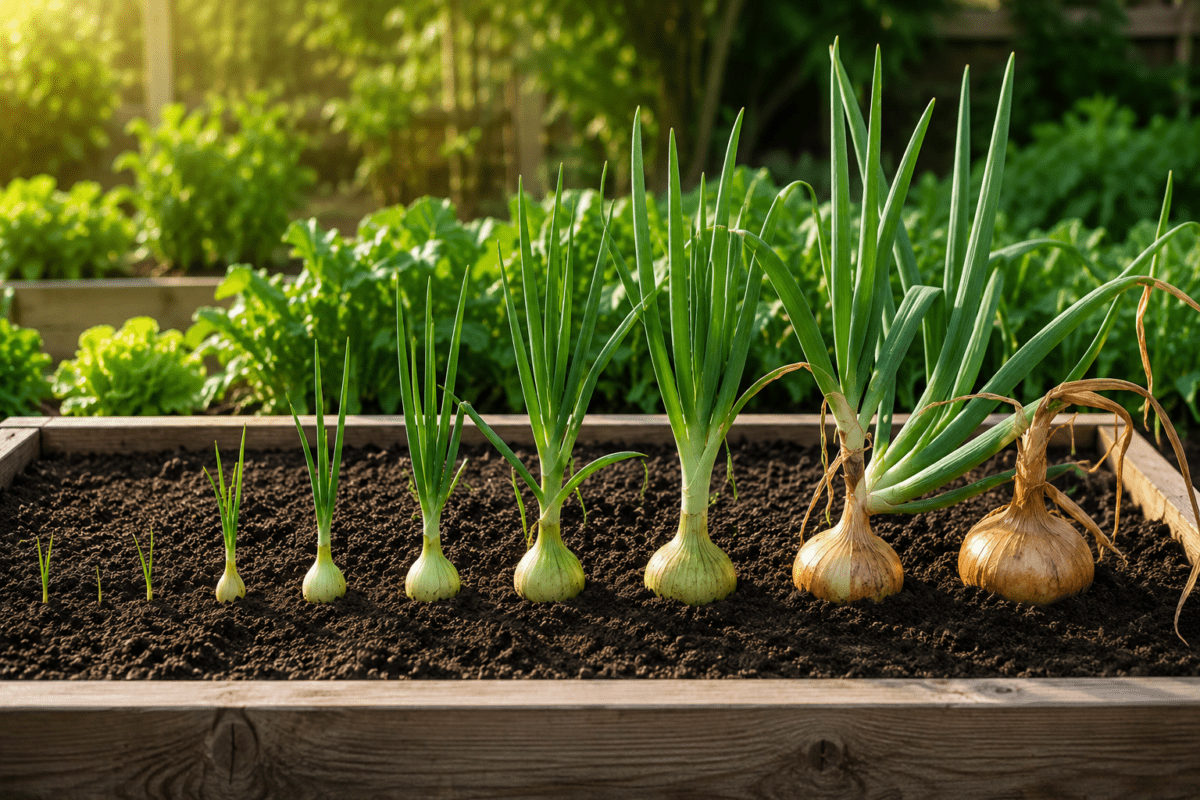
After planting, onions require relatively little maintenance, but consistent care throughout the growing season leads to healthier plants and better harvests.
Regular monitoring allows you to solve small problems before they become serious.
Weed Control
Because onion plants develop relatively shallow roots, weeds can easily compete with them for water, nutrients, and growing space.
Remove weeds regularly by hand or with a small hand tool. Be careful not to disturb the onion roots while cultivating.
Keeping the planting bed weed-free allows onions to receive maximum nutrients, sunlight, and moisture.
Mulching
Applying a thin layer of straw or shredded leaves around onion plants offers several benefits.
Mulch helps:
- Retain soil moisture
- Reduce weed growth
- Moderate soil temperature
- Prevent soil from splashing onto the leaves
Avoid placing mulch directly against the onion bulbs, especially in humid climates.
Common Pests and Diseases
Inspect onion plants every week for signs of problems.
Some of the most common onion pests include:
- Onion thrips
- Onion maggots
- Aphids
- Cutworms
Common diseases include:
- Downy mildew
- Purple blotch
- Neck rot
- Fusarium basal rot
Proper spacing, crop rotation, healthy soil, and good air circulation greatly reduce the likelihood of pest and disease problems.
Understanding Onion Growth Stages
Knowing the different onion growth stages helps you provide the right care at the right time.
Bulb Onion Growth Stages
A typical bulb onion develops through several stages:
- Seed germination
- Seedling establishment
- Leaf development
- Bulb initiation
- Bulb enlargement
- Maturity and top fall
- Harvest and curing
Each stage requires slightly different care, particularly regarding watering and fertilization.
Onion Plant Growth Stages Explained
During the first few weeks, onions focus almost entirely on developing roots and leaves.
Once the appropriate day length is reached, plants naturally begin directing energy into bulb formation.
Healthy foliage during the early stages directly influences final bulb size because every green leaf contributes to bulb development.
Bulbing Onions
Bulb formation begins when the onion variety receives its required number of daylight hours.
This is why selecting the correct long-day, short-day, or intermediate-day variety is so important.
Avoid disturbing plants once bulbs begin enlarging, as damaged roots may reduce final bulb size.
How to Grow Bigger Onion Bulbs
Large onions don’t happen by accident. They result from proper variety selection, fertile soil, consistent watering, and good plant care throughout the season.
How to Grow Big Onions
To produce larger onions:
- Choose the correct day-length variety.
- Plant in full sun.
- Maintain proper spacing.
- Keep weeds under control.
- Feed plants appropriately.
- Water consistently.
Healthy leaves produce larger bulbs, so protecting foliage is essential.
How to Grow Big Bulb Onions
For exceptionally large bulbs:
- Start with fertile, well-drained soil.
- Avoid overcrowding.
- Keep plants actively growing without stress.
- Reduce nitrogen after bulbs begin forming.
- Harvest only after bulbs reach full maturity.
Patience and consistent care are the keys to growing impressive onions.
Encouraging Large Bulb Formation
Bulb development depends on healthy foliage, adequate moisture, and proper nutrition.
Avoid damaging leaves whenever possible because each healthy leaf contributes another ring to the developing onion bulb.
Companion Planting
Companion planting helps maximize garden space while naturally reducing certain pest problems.
What to Plant with Onions
Good companion plants include:
- Carrots
- Beets
- Lettuce
- Spinach
- Tomatoes
- Peppers
- Strawberries
- Chamomile
These plants generally grow well alongside onions without competing heavily for resources.
Plants to Avoid Growing Near Onions
Avoid planting onions close to:
- Beans
- Peas
- Asparagus
These crops may compete differently for nutrients or grow better in separate areas of the garden.
Harvesting Onions
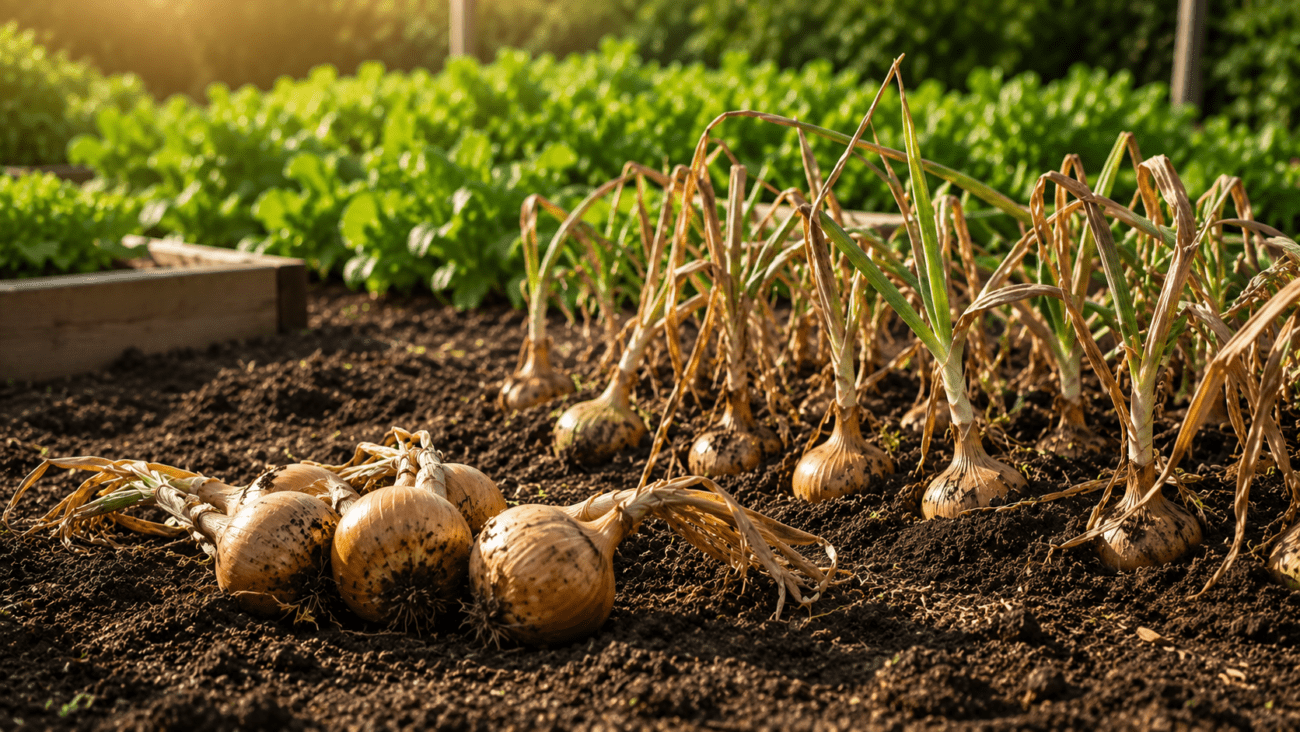
Harvesting at the proper time ensures the best flavor and longest storage life.
How Long Do Onions Take to Grow?
If you’re wondering how long do onions take to grow, most bulb onions mature in approximately 90–120 days, depending on the variety and growing conditions.
Green onions can often be harvested much earlier, usually within 50–70 days.
How to Know When to Harvest Onions
Your onions are ready for harvest when:
- Most tops naturally fall over.
- Leaves begin turning yellow or brown.
- Bulbs reach their expected size.
- Outer skins become dry and papery.
Avoid harvesting too early, as immature onions do not store well.
Onion Harvest Time
Choose a dry day for harvesting.
Loosen the soil gently with a garden fork and lift the bulbs carefully to avoid bruising them.
Allow freshly harvested onions to cure in a warm, dry, well-ventilated location for 2–3 weeks before storage.
When Are Spring Onions Ready to Harvest?
Spring onions may be harvested whenever they reach the desired size.
Many gardeners begin harvesting once the stems are pencil-thick, although they can be left longer if larger stems are preferred.
Storing Onions
Proper storage allows onions to remain fresh for several months.
Best Onions for Long-Term Storage
Generally, yellow storage onions keep longer than sweet onions because they contain less moisture.
Choose storage varieties if you plan to preserve onions through winter.
How to Cure Onions Properly
After harvest, spread onions in a single layer in a dry, airy location away from direct sunlight.
Wait until the necks are completely dry and the outer skins become papery before trimming roots and foliage.
Storage Mistakes to Avoid
Avoid:
- Storing damp onions.
- Using sealed plastic bags.
- Keeping onions in humid locations.
- Storing damaged bulbs with healthy ones.
Cool, dry, well-ventilated conditions provide the longest storage life.
Frequently Asked Questions
Do Onions Grow in the Ground?
Yes. Bulb onions naturally develop underground while their leaves grow above the soil surface.
When Are Onions in Season?
Most onions are harvested from late spring through early fall, depending on the planting season and variety.
Can You Grow Green Onions from Bulb Onions?
Yes. Many bulb onions can produce fresh green shoots that are harvested as green onions.
Can You Grow Onions from Sprouted Onions?
Yes. Sprouted onions can be replanted and often produce green onions or additional seed, although they may not always produce large storage bulbs.
Can Onion Leaves Be Eaten?
Yes. Healthy green onion leaves are edible and commonly used in soups, salads, and many cooked dishes.
What Do Healthy Onion Roots Look Like?
Healthy onion roots are white, firm, and well-branched. Brown, mushy, or foul-smelling roots often indicate disease or excessive moisture.
Final Thoughts
Learning how to grow onions is one of the most rewarding skills for any home gardener. Whether you start from seeds, onion sets, seedlings, or even sprouted onions, success comes down to choosing the right variety, planting at the proper time, preparing fertile soil, and providing consistent care throughout the season.
With the techniques covered in this guide, you’ll be well prepared to grow healthy onion plants, harvest flavorful bulbs, and enjoy homegrown onions for months after the growing season ends.
Recent Posts
How to Grow Sweet Potatoes: A Complete Guide for Beginners

How to Grow Corn: A Complete Guide for Home Gardeners
How to Grow Chili Peppers: A Complete Guide for Beginners
How to Grow Garlic: A Complete Guide to Planting, Caring for, and Harvesting Garlic
How to Grow Pumpkins: A Complete Beginner’s Guide to Bigger Harvests
Gardening Kits for Beginners
Best Time to Harvest Figs
Organic Fertilizer for Grapes
How to Plant and Grow Grapes
How to Grow and Care Cherries
Fertilizer for Banana Trees
How to Grow and Care Banana Tree
How to Grow Onions from Sprouted Onions